
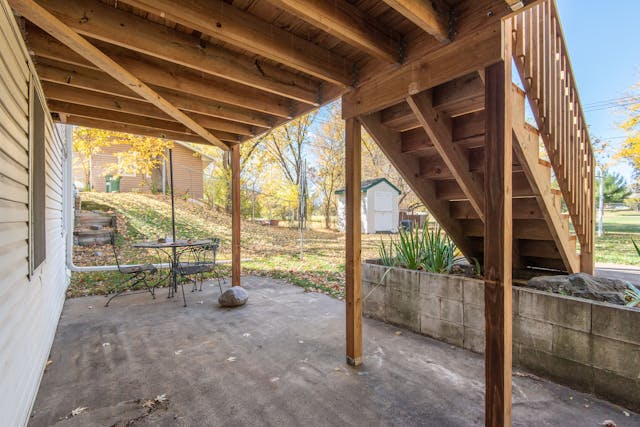
A backyard deck is one of the most enjoyable parts of a home. It provides space for grilling, relaxing, and gathering with family and friends. But because decks are exposed to rain, snow, sunlight, and changing temperatures year after year, they can slowly develop structural problems that are easy to miss.
A quick visual inspection each season can help identify concerns before they become expensive repairs—or serious safety hazards.
Start with the Support Posts
The posts that carry the weight of the deck are the foundation of the entire structure. Walk around the perimeter and look for signs of rot, insect damage, or splitting wood, especially near the base where moisture tends to collect.
Posts should stand straight and feel solid. If a post appears to lean, sink, or show significant cracking, it may no longer be providing adequate support.
Check the Ledger Board Connection
One of the most critical parts of any deck is the ledger board, which secures the deck to the house. Problems in this area are a common cause of deck failures.
Look for loose fasteners, rusted bolts, or gaps where the deck meets the exterior wall. Water stains, soft wood, or deteriorated siding near the connection can suggest moisture intrusion and hidden decay. Any movement in this area deserves prompt professional evaluation.
Inspect the Surface
Take a slow walk across the deck and pay attention to how it feels underfoot. Boards should feel firm and level, without excessive bounce or sagging.
Check for cracked, warped, or rotted boards, as well as protruding nails or screws that could create tripping hazards. Areas around planters, outdoor rugs, and shaded corners are especially prone to moisture-related deterioration.
Test Railings and Stairs
Guardrails and handrails should feel sturdy when pushed firmly. Any wobbling or looseness is a warning sign that connections may have weakened.
Stair treads should be secure and free from rot or splitting. Uneven steps, loose risers, and unstable railings increase the risk of falls and should be addressed as soon as possible.
Look Beneath the Deck
If the underside is accessible, inspect the joists, beams, and hardware. Metal connectors should be free from excessive rust, and framing members should show no signs of rot, splitting, or insect damage.
Also check that drainage around the deck allows water to flow away rather than pooling around the supports.
When to Call a Professional
A homeowner can spot many visible concerns, but some structural issues are hidden from view. If the deck feels unstable, shows signs of decay, or has not been professionally evaluated in many years, a thorough inspection is a wise investment.
A few minutes spent checking your deck can provide peace of mind and help ensure this outdoor space remains safe, sturdy, and ready to enjoy throughout the year.
Recent Comments